Salt and Light in the Legislative Halls: A Faith Community's Practical Playbook for Ethical Public Advocacy

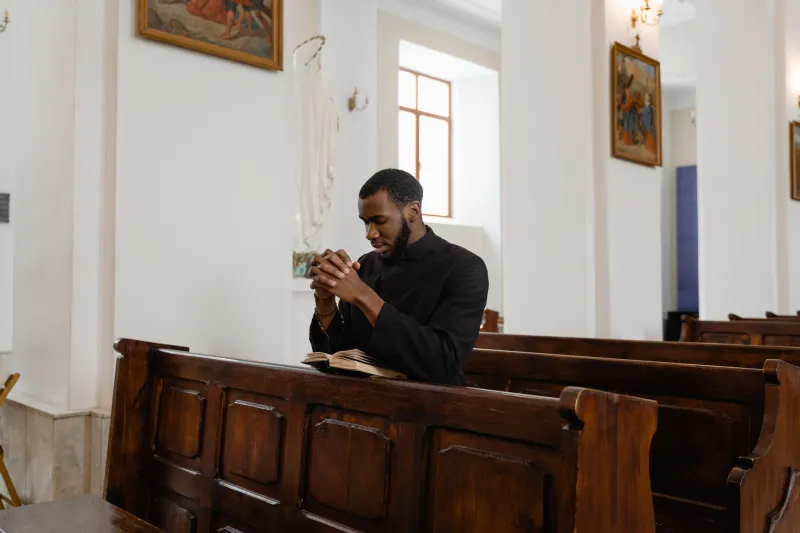
Photo by Photo by Syed F Hashemi on Unsplash on Unsplash
Why This Conversation Is Unavoidable
Some pastors bristle at the word "advocacy." It carries connotations of protest marches, partisan campaigns, and the kind of institutional entanglement that many faith leaders rightly fear. But consider this: every time a congregation operates a food pantry, every time a church school teaches children about human dignity, every time a bishop writes a letter to a senator, that community is engaged in advocacy — the public expression of values held sacred.
The question is never whether a faith community will influence the world around it. The question is whether that influence will be thoughtful, principled, and sustainable, or reactive, compromised, and ultimately self-defeating.
I have witnessed both outcomes up close. I have seen small congregations move mountains through patient, principled engagement with their local governments. I have also watched nationally prominent religious organizations squander generations of moral credibility in a single election cycle by becoming indistinguishable from political action committees. The lessons from both are worth examining carefully.
What follows is not a partisan playbook. It is a framework drawn from hard experience, offered to faith leaders who want to engage the public square without losing the very thing that gives them standing to be there.
1. Know What You Are — and What You Are Not
The single greatest strategic error I have observed in faith-based advocacy is a failure of identity clarity. A church is not a lobbying firm. A religious nonprofit is not a campaign committee. A pastor is not a political consultant.
This sounds obvious, but the pressures of high-stakes advocacy are remarkably effective at blurring these distinctions. When a powerful legislator invites your organization to the table, when major donors condition their giving on specific political outcomes, when media attention rewards the loudest and most combative voices — the temptation to become something other than what you are is intense and constant.
The faith communities that maintain long-term moral credibility are those that ruthlessly guard their institutional identity. They engage political processes as witnesses to transcendent values, not as players optimizing for electoral outcomes. That distinction shapes everything: the language they use, the alliances they form, the compromises they refuse, and the victories they celebrate.
Practical application: Before any major advocacy campaign, have your leadership team answer this question in writing — What would we do if this position cost us our relationship with the political party we generally prefer? If you cannot answer honestly, you are not ready to engage.
2. Build Relationships Before You Need Them
One of the most effective faith-based advocacy operations I have ever encountered was run out of a mid-sized evangelical congregation in the Midwest. They had no national profile, no major donors, and no cable news presence. What they had was a twenty-year history of showing up.
They showed up at city council meetings when no controversy was on the agenda. They hosted civic leaders for community dinners with no ask attached. They volunteered in ways that demonstrated genuine investment in the welfare of their city, not merely in the advancement of their preferred policies. When a critical zoning decision arose that would have effectively shuttered their network of crisis pregnancy centers, they had a room full of relationships to draw upon — including relationships with officials who shared almost none of their theological commitments.
This is the patient, unglamorous work of authentic community engagement, and it is far more powerful than any single-issue mobilization campaign.
Practical application: Map your congregation's existing relationships with local, state, and federal officials. Identify gaps. Assign specific leaders to cultivate relationships in those gaps — not for immediate advocacy purposes, but for genuine civic engagement. This is a multi-year investment, not a pre-election sprint.
3. Distinguish Between Non-Negotiables and Prudential Judgments
Not every policy question is a moral absolute, and treating them as though they are is one of the fastest ways to lose credibility with both your congregation and the broader public.
The sanctity of human life is a non-negotiable moral principle. The precise configuration of a healthcare funding bill is a prudential judgment about which reasonable people — including reasonable Christians — can differ. Religious liberty is a foundational commitment. The specific legislative mechanism best suited to protect it in a particular context is a policy question requiring careful analysis.
Faith communities that conflate these categories end up in an impossible position: either they must treat every policy question as a matter of eternal consequence (exhausting and ultimately unbelievable), or they must abandon their non-negotiables along with everything else when political winds shift.
The most credible religious voices in the public square are those that speak with absolute clarity on genuine moral absolutes, and with appropriate humility on matters of policy implementation. This is not weakness — it is intellectual honesty, and it is far more persuasive to legislators and opinion-shapers than the alternative.
Practical application: Develop a written document — a kind of advocacy constitution — that clearly distinguishes your organization's non-negotiable moral commitments from your policy preferences. Share it publicly. It will strengthen your credibility and clarify your mission.
4. Grassroots Organizing Is Not a Lesser Tool
In an era obsessed with media strategy and donor cultivation, the humble work of grassroots organizing is chronically undervalued in faith-based advocacy circles. This is a mistake.
Legislators respond to constituents. Not to national organizations, not to celebrity endorsers, not to large checks — but to voters in their districts who are paying attention and who will remember. A hundred parishioners who can speak personally and knowledgeably to their state representative about the human impact of a specific policy are worth more than any amount of Washington lobbying.
The most effective grassroots advocacy I have been part of involved training ordinary congregants — not professional advocates — to tell their own stories in their own words to their own representatives. A grandmother describing how a particular education policy affected her grandchildren. A small business owner explaining the practical consequences of a regulatory burden on his faith-based enterprise. A young mother articulating why her community's crisis pregnancy center was irreplaceable.
These stories, delivered by real constituents with genuine relationships to the communities they represent, move legislation in ways that polished advocacy campaigns frequently cannot.
Practical application: Identify ten to fifteen members of your congregation who are willing to become informed, engaged constituents on one or two key issues. Train them. Connect them with their elected officials. Follow up. This is slow work, but it compounds over time.
5. Guard Against the Corruption of Access
I want to close with a cautionary word that I offer from painful personal experience.
Access to power is genuinely intoxicating. When a senator returns your call, when a White House official invites you to a briefing, when your organization's position is cited in a floor speech — there is a satisfaction in that recognition that is easy to mistake for effectiveness. It is not the same thing.
I have watched religious leaders — good men and women of genuine faith — gradually transform themselves into reliable servants of political establishments because they became addicted to access. They stopped saying the difficult things because difficult things endangered invitations. They began tailoring their theology to the preferences of their patrons. They told themselves they were maintaining influence in order to do good — and perhaps some of them were — but the cumulative cost to their moral authority was devastating.
The faith community's power in the public square derives entirely from its perceived independence and integrity. The moment it is seen as an extension of a political operation, that power evaporates. It cannot be reclaimed by a press release or a strategic pivot. It must be rebuilt slowly, over years, through demonstrated willingness to speak uncomfortable truths to all sides.
Salt that has lost its savor, our Lord observed, is good for nothing but to be thrown out and trampled underfoot. The warning applies with full force to religious organizations that have traded their prophetic independence for political proximity.
Engage the public square. Do it boldly, do it skillfully, do it with genuine love for your neighbors and your nation. But never, under any circumstances, mistake access for faithfulness. The two are not the same — and confusing them is the beginning of a very long fall.