Sacred Uncertainty: How the Courage to Question Forges a Faith That Endures
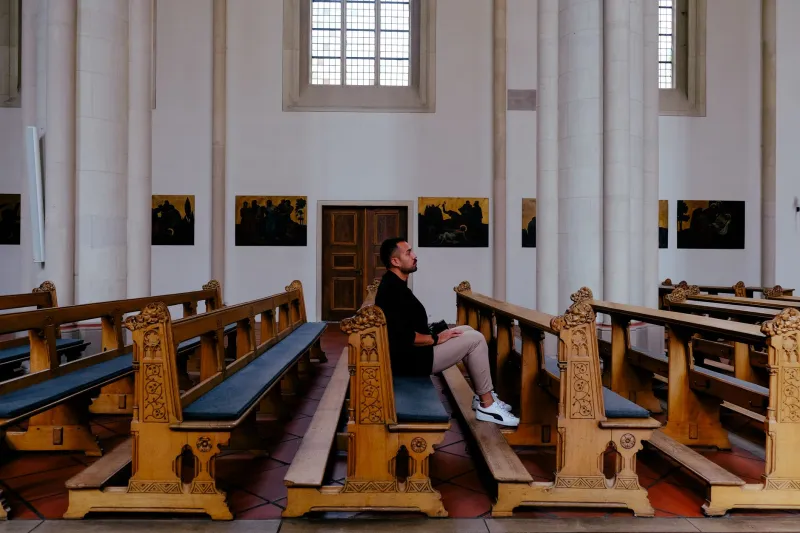
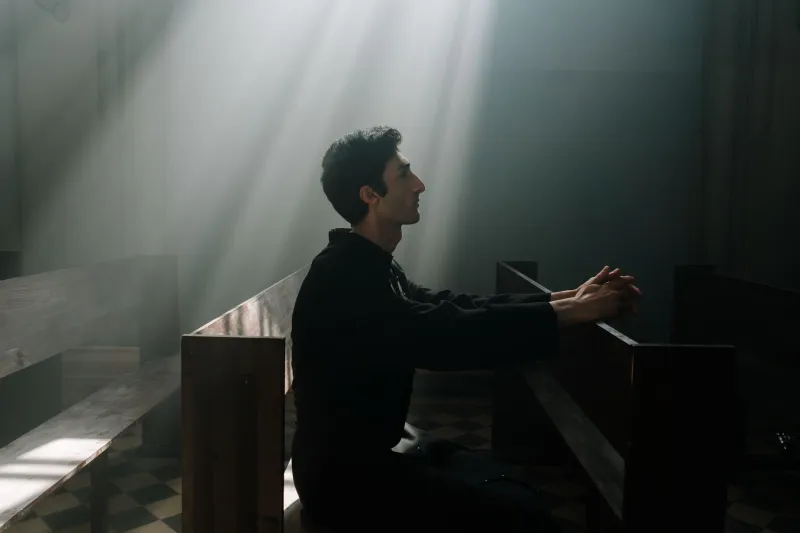
There is a particular kind of loneliness that belongs almost exclusively to the sincere believer who finds himself doubting. It is not the comfortable skepticism of the declared agnostic, nor the breezy indifference of the cultural secular. It is something far more painful — the ache of a person who wants to believe, who has staked his life on belief, and who nonetheless finds himself standing in the dark, unable to locate the certainty he once held so effortlessly.
I have been that person. And after decades of ministry, pastoral work, and public advocacy, I can tell you with full confidence: so have most of the faithful men and women I have ever known.
We do not speak of it often enough. In many American congregations, doubt carries the social weight of confession — something to be whispered to a trusted pastor, perhaps, but never voiced from a pew, never raised in a Sunday school classroom, and certainly never acknowledged from a pulpit. The implicit message, however unintentional, is that faith and questioning are adversaries. That to entertain uncertainty is to flirt with apostasy.
I want to challenge that assumption directly. Not to unsettle the faithful, but to free them.
The Biblical Witness of Holy Wrestlers
The testimony of Scripture is, on this point, remarkably consistent: God is not threatened by our questions. He is, in fact, extraordinarily patient with them.
Consider Job, whose suffering drove him to demand an audience with the Almighty — not to offer praise, but to lodge a grievance. His friends, those well-meaning theologians of conventional wisdom, urged him toward silence and submission. God, in the end, rebuked them and commended Job, who had spoken what was true about his own experience, however raw and unfiltered that speech may have been.
Consider the psalmists, who gave us some of the most searingly honest literature in all of human history. "My God, my God, why have you forsaken me?" is not a verse composed in a moment of triumphant certainty. It is a cry torn from the depths of abandonment. Yet it is Scripture. It is sacred text. God saw fit to preserve it as such for every generation that followed.
Consider Thomas, whom tradition has treated with a certain condescension — "doubting Thomas," we call him, as though his request for evidence were a moral failing. But read the account again carefully. When Thomas finally beheld the risen Christ, his declaration — "My Lord and my God" — stands as one of the most theologically precise confessions in the entire New Testament. His doubt did not disqualify him. It deepened him.
And consider Jacob, who literally wrestled with God through the night and emerged at dawn limping but blessed. The very name Israel — the name God gave him — means, in its root, "one who strives with God." The people of God are, by their very name, a people who do not merely accept passively but who contend, who engage, who press in.
The Difference Between Doubt and Unbelief
There is a distinction that pastoral theology has not always made clearly enough, and it is worth stating plainly: doubt and unbelief are not the same thing.
Unbelief is a settled disposition — a resolved turning away from the claims of faith. Doubt, by contrast, is precisely the opposite of settled. It is restless. It is searching. It is the condition of a person who cares enough about truth to refuse easy answers.
C.S. Lewis, that most reluctant of converts, wrote extensively about the process by which his own fierce intellectual resistance was gradually, almost against his will, overcome by the weight of evidence and the persistence of a pursuing God. His doubt was not an obstacle to faith. It was the very corridor through which faith arrived.
In my own life, the periods of greatest spiritual growth have rarely coincided with seasons of untroubled certainty. They have come, more often than not, in the aftermath of serious questioning — when I have allowed myself to sit with a difficult theological problem, to refuse the comfort of a pat answer, and to wait in the discomfort until something more durable and honest emerged.
That process is not pleasant. But it is, I would argue, profoundly spiritual.
Why Intellectual Honesty Is a Moral Obligation
For those of us who speak in public — who preach from pulpits, testify before legislatures, engage the press, or simply represent our faith to neighbors and colleagues — intellectual honesty about our own uncertainty is not merely a personal spiritual discipline. It is an ethical responsibility.
A faith that has never been tested cannot be fully trusted, either by its holder or by those observing from the outside. When believers project an unshakeable confidence that does not reflect their genuine interior life, they create a false standard that alienates the struggling, intimidates the young, and ultimately undermines the credibility of the very witness they intend to offer.
America's public square is not well-served by religious voices that perform certainty. It is well-served by voices that have earned their convictions — that have wrestled with the hardest counterarguments, engaged with the most challenging evidence, and arrived at their positions through a process of genuine, costly intellectual and spiritual labor.
That is the kind of faith that can withstand scrutiny. That is the kind of faith that earns a hearing.
Questions That Strengthen Rather Than Sever
Not every question, of course, is asked in good faith. There is a form of perpetual skepticism that functions not as a search for truth but as a sophisticated mechanism for avoiding commitment. The person who raises endless objections without ever allowing any answer to satisfy has not embraced holy wrestling — they have constructed an elaborate defense against the demands of belief.
The questions I am commending are of a different character. They are asked by people who want to find answers. They are asked with a willingness to be changed by what is discovered. They are asked within a community of faith, in dialogue with Scripture and tradition, with the humility to recognize that one's own reasoning is not the final arbiter of truth.
Asked in that spirit, hard questions do not erode faith. They refine it. They strip away the accidental and the inherited and the merely conventional, leaving behind something more essential — a faith chosen deliberately, held with clear eyes, and capable of sustaining a life.
The Pastoral Word
If you are reading this as someone who carries the weight of unspoken doubt, I want to offer you something simple: permission.
You are not failing your faith by questioning it. You may, in fact, be honoring it. The God of Scripture is large enough to absorb your questions, patient enough to wait while you wrestle, and present enough to meet you when you finally stop running from the uncertainty and turn to face it directly.
Bring your doubts into the light. Name them honestly. Examine them carefully. And do not be surprised if, in that very process, you discover a faith more solid, more personal, and more yours than anything you held before the questions came.
That is not the loss of faith. That is its maturation.