The Hidden Cost of Speaking Truth: A Personal Reckoning with Prophetic Witness

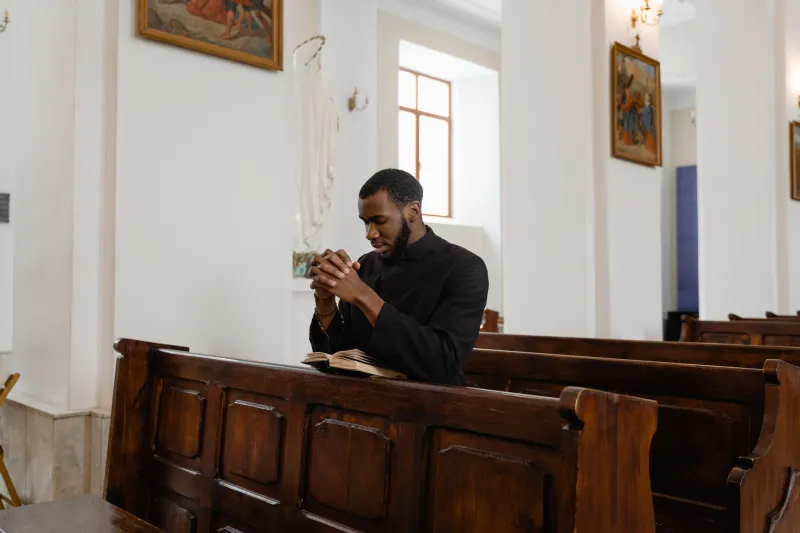
Photo: Peter S , CC BY-SA 2.0, via Wikimedia Commons
I did not fully understand what I was agreeing to.
When I first felt the weight of a call to speak into the public square — to carry the moral convictions of my faith into spaces where they were neither welcome nor comfortable — I understood it in the abstract. I knew from Scripture that the prophetic voice is rarely popular. I had read Jeremiah's laments, studied the fates of Amos and Micah, sat with the narratives of those whose words cost them everything. I thought that knowledge prepared me.
It did not. Not really.
The preparation that theology provides is essential, but it is intellectual. The actual experience of prophetic witness is visceral, social, and — in ways I was not ready for — profoundly lonely.
What the Call Feels Like From the Inside
There is a particular quality to the conviction that one must say something that others do not want to hear. It does not feel triumphant. It does not feel righteous in the way that word is popularly used. It feels, more often than not, like a burden you would gladly set down if you could find any honest justification for doing so.
I have spoken publicly on positions that placed me at odds with powerful constituencies on both the left and the right. I have challenged fellow conservatives on issues of human dignity that they preferred to leave undisturbed. I have challenged progressive audiences on moral commitments they assumed I shared. In neither case did the response feel like vindication. In both cases, the response felt like a door closing.
That is the first thing I would say to anyone who senses a prophetic calling: the closing of doors is part of the vocation, not an interruption of it.
The Social Toll Is Real and Should Not Be Minimized
American evangelical culture — and I say this as someone who has spent his adult life within it — has a complicated relationship with the prophetic tradition. We celebrate the prophets of Scripture. We are considerably less comfortable with their contemporary equivalents.
When a voice within a community begins to challenge that community's assumptions, the initial response is rarely engagement. It is more often a kind of social recalibration. Invitations dry up. Introductions become less warm. The informal networks through which influence and opportunity flow quietly reroute themselves around the inconvenient speaker.
This is not unique to religious communities. I have watched it happen in political circles, in academic institutions, and in media organizations. The mechanism is the same everywhere: communities protect their coherence by marginalizing the voices that threaten it. What makes it particularly painful in the church is that the community doing the marginalizing is the one to which you have pledged your deepest loyalties.
I have lost friendships over positions I held on conscience. I have lost platforms. I have received correspondence — some of it from people I respected — that was designed not to engage my arguments but to damage my standing. I am not recounting this to invite sympathy. I am recounting it because I believe that honest acknowledgment of these costs is itself a form of pastoral service to those who are walking this road now.
The Spiritual Dimension That Seldom Gets Discussed
Beyond the social consequences, there is a spiritual weight to prophetic witness that the literature on public theology tends to underexamine. When you are repeatedly misrepresented — when the position you have carefully, prayerfully, and at considerable personal cost articulated is flattened into a caricature and then attacked — something happens to your interior life that requires deliberate attention.
I have had to guard against two opposite temptations. The first is bitterness — the slow calcification of the heart that occurs when you begin to interpret every misunderstanding as malice, every criticism as bad faith. The second is what I can only describe as a kind of prophetic inflation — the gradual drift toward believing that because your position is unpopular, it must therefore be correct. Unpopularity is not, by itself, a mark of faithfulness. History is full of people who were unpopular for the wrong reasons.
The spiritual discipline required is one of ongoing surrender — returning, again and again, to the question of whether you are speaking from genuine conviction before God or from the more subtle satisfactions of contrarianism and self-regard.
What Faith Communities Owe Their Prophetic Voices
The burden here does not rest entirely on those who speak. Communities of faith bear a reciprocal responsibility toward those within their midst who are called to uncomfortable witness.
That responsibility begins with genuine listening — not the performance of listening that precedes a prepared rebuttal, but the slower, more demanding work of actually considering whether the uncomfortable voice might be carrying something true. It extends to the protection of dissent as a legitimate expression of faithfulness, rather than a threat to institutional cohesion. And it includes the practical, unglamorous work of standing beside those who have paid social or professional costs for their convictions, even when — especially when — you are not certain you agree with them.
The American church, across its many traditions, has historically been far better at celebrating prophetic voices in retrospect than at sustaining them in the present. We build monuments to those whose words we once tried to silence. The more demanding and more faithful response is to create communities where the living prophetic voice does not have to choose between its calling and its belonging.
A Word to Those Who Recognize This Road
If you are reading this and you recognize the terrain I am describing — if you have felt the particular loneliness of holding a conviction that costs you something real — I want to offer you this: the cost is not evidence that you are wrong. Neither is it evidence that you are right. It is simply the nature of the vocation.
Jeremiah did not know, in the midst of his weeping, how his words would be received across the centuries. He knew only that he could not remain silent. That is, in the end, the only ground on which the prophetic voice can stand — not the certainty of immediate vindication, but the faithfulness of the present moment.
Speak carefully. Speak humbly. Speak with your relationships intact wherever integrity allows. And when the door closes, trust the One who opens doors that no one can shut.