Holding Convictions and Each Other: How Faith Communities Can Disagree Without Dividing

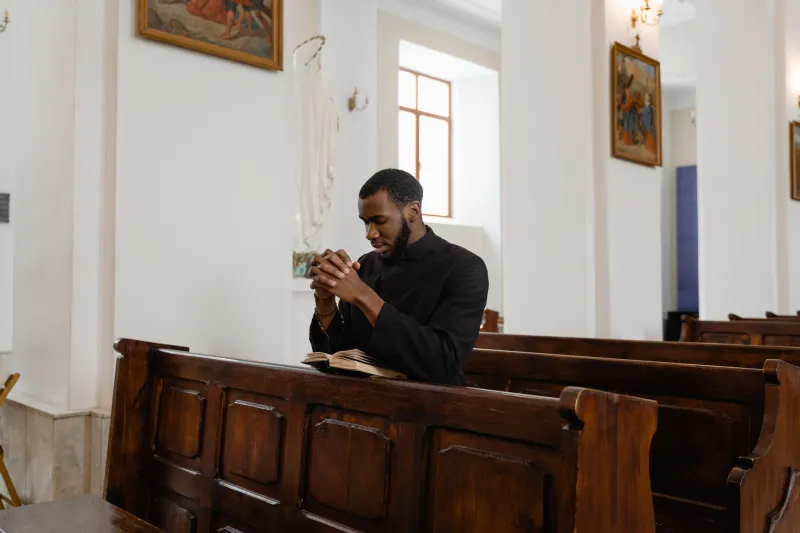
Photo by Photo by Belper Unitarians on Unsplash on Unsplash
There is a moment familiar to nearly every pastor, elder, or longtime church member — the moment a disagreement over a matter of conscience surfaces in the pew, the committee room, or the fellowship hall, and the air changes. What was warm becomes cautious. What was open becomes guarded. The community that gathered in the name of unity suddenly finds itself standing on two sides of a line neither party intended to draw.
I have lived that moment more times than I can count. And I have come to believe that how a faith family handles it reveals more about the depth of its spiritual formation than almost any other test it will face.
Disagreement Is Not a Sign of Failure
The first corrective we must apply is to our own instincts. Many believers — particularly those formed in traditions that prize doctrinal unity — have internalized the assumption that serious moral disagreement within a congregation signals something has gone wrong. In fact, the New Testament assumes the opposite. Paul's letters to the Roman and Corinthian churches are saturated with counsel for communities already in the middle of genuine, sometimes heated, disputes over conscience.
In Romans 14, Paul addresses a community divided over dietary practices and the observance of sacred days — matters that carried real theological weight in that cultural moment. His instruction is neither to suppress the disagreement nor to demand uniformity. Instead, he calls both the "strong" and the "weak" to a posture of mutual accountability before God: "Each of us will give an account of himself to God. Therefore let us not pass judgment on one another any longer" (Romans 14:12–13, ESV).
This is not moral relativism. Paul is not suggesting that all positions are equally valid. He is insisting that the adjudication of another believer's conscience belongs ultimately to God, not to us — and that community life must be ordered accordingly.
The Difference Between Matters of Doctrine and Matters of Conscience
One of the most practically useful distinctions any faith community can recover is the classical Protestant differentiation between dogma — the non-negotiable doctrinal core — and adiaphora, matters of conscience that, while genuinely important, do not constitute the boundaries of orthodox faith.
This distinction does not resolve every disagreement. Reasonable people within the same tradition will sometimes place the same issue in different categories. But the discipline of asking the question — Is this a hill on which fellowship must stand or fall? — introduces a necessary pause before the lines harden.
Practically speaking, congregational leaders can facilitate this discernment by creating structured, unhurried forums for theological conversation. Not debate — conversation. There is a profound difference. Debate is adversarial by design; it produces winners and losers. Conversation, conducted with what the Quaker tradition calls "holy listening," seeks understanding before it seeks resolution.
Communication That Preserves Dignity
Beyond the theological framework, the mechanics of communication matter enormously. In my own ministry and advocacy work, I have observed that the manner in which a disagreement is raised often determines whether the community will emerge from it stronger or more fractured.
Several principles have proven durable across widely different contexts:
Name the relationship before naming the disagreement. When raising a point of moral tension, begin by affirming the bonds that preexist the conflict. "I want to discuss something difficult precisely because I value what we share" — that framing changes the entire register of what follows.
Distinguish between the person and the position. This is easier said than done, particularly on issues that touch identity and deeply held moral conviction. But the discipline of addressing the argument rather than attributing motive to the one making it is essential if trust is to survive the exchange.
Allow for the possibility that you are not entirely right. Humility here is not weakness. It is epistemic honesty. Our knowledge, even of things we hold with great conviction, is partial. First Corinthians 13:12 remains true in the committee room as much as in the sanctuary: "For now we see in a mirror dimly."
Case Studies Worth Studying
The historical record offers instructive examples of communities that have navigated moral divides without dissolution.
The Evangelical Covenant Church, navigating serious internal tension over social ethics in the latter half of the twentieth century, developed what it called a "covenant of belonging" — an explicit commitment that members would remain in relationship through disagreement rather than departing at the first serious rupture. The model was imperfect and the tensions never fully resolved, but the community survived and in many respects deepened.
Closer to our present moment, a number of urban multiethnic congregations across cities like Chicago, Atlanta, and Houston have developed what one pastor described to me as "disagreement liturgies" — structured moments within regular church life where differing perspectives on public moral questions are heard, prayed over, and held in tension rather than forced toward premature resolution. These are not exercises in avoiding hard truths. They are exercises in refusing to let hard truths become the last word about a community's life together.
What Genuine Community Requires
I want to be honest about the limits of what I am proposing. There are positions so fundamentally at odds with the revealed character of God that no framework of charitable disagreement can accommodate them within orthodox Christian fellowship. The boundaries of communion are real, and pastoral leaders bear a solemn responsibility to maintain them.
But those boundaries are narrower than our tribal instincts often suggest. The number of issues on which Scripture speaks with such clarity that reasonable, Spirit-filled, Scripture-honoring believers cannot land in genuinely different places is smaller than the culture wars would have us believe.
The faith community that learns to hold both its convictions and its people with open hands — firm where firmness is required, generous where generosity is possible — will be a community that the watching world finds genuinely remarkable. In an era defined by fragmentation, a congregation that disagrees well is itself a form of prophetic witness.
That, in the end, is what is at stake. Not merely the comfort of our church relationships, but the credibility of our common testimony.